Tooth loss affects people of all ages and backgrounds, and it changes more than just the way you look — it alters how you chew, speak, and maintain oral health. Modern dental implants recreate the structure of a natural tooth by replacing both the visible crown and the root beneath the gum. This root-level support is what makes implant restorations feel and function like natural teeth over the long term.
Implants are made from biocompatible materials designed to integrate with the jawbone and provide a stable foundation for crowns, bridges, and denture solutions. Unlike restorations that only sit on top of existing teeth or gum tissue, implants restore the underlying support system that keeps your bite balanced and your facial features natural.
Choosing implant dentistry is about restoring everyday activities — enjoying a wider range of foods, speaking without worry, and smiling with confidence. At Newpoint Family Dental, our emphasis is on predictable, evidence-based implant care tailored to each patient’s anatomy and goals.

When a tooth is lost, the bone that once supported it begins to remodel. That gradual bone loss can change how your jaw looks and weaken neighboring teeth. A dental implant replaces the tooth root and restores the mechanical stimulation the bone needs to remain healthy. This effect helps preserve facial contours and reduces the long-term changes that can follow untreated tooth loss.
Because implants are anchored in bone, they transfer chewing forces in a way that mimics natural teeth. This makes it possible to eat a wide range of foods without the slipping, sore spots, or adhesive dependence sometimes associated with removable dentures. For many patients, the return of normal function is the most meaningful benefit of implant therapy.
Implants also support adjacent teeth by preventing unwanted shifting into empty spaces. Over time, that stability reduces the risk of further dental problems and contributes to a more sustainable, long-term oral health plan.
Successful implant treatment begins with a thorough evaluation. We assess bone quantity and quality, review medical history, and consider bite dynamics and aesthetic goals. Modern imaging and diagnostic tools allow precise planning of implant position and the final restoration so that outcomes are both functional and natural-looking.
Surgical placement is carried out with an eye toward comfort and accuracy. Many implant procedures are performed in-office on an outpatient basis, and options for local anesthesia or sedation are discussed in advance so patients know what to expect. Meticulous surgical technique and careful post-operative guidance help minimize complications and support predictable healing.
Osseointegration — the process by which the implant fuses with bone — typically takes a few months. During this period, a temporary restoration may be used while the implant bonds. Once integration is complete, the final crown, bridge, or denture is fabricated and adjusted to blend seamlessly with surrounding teeth and tissues.
Implant therapy is versatile. A single missing tooth can be replaced with an implant and crown that stands independently, preserving neighboring healthy enamel. This approach avoids altering adjacent teeth and provides a long-term, low-maintenance solution that functions like a natural tooth.
For multiple adjacent missing teeth, an implant-supported bridge can replace several teeth without relying on neighboring tooth structure for support. Strategically placed implants serve as anchors for a bridge, restoring proper bite forces and helping to maintain bone where teeth are absent.
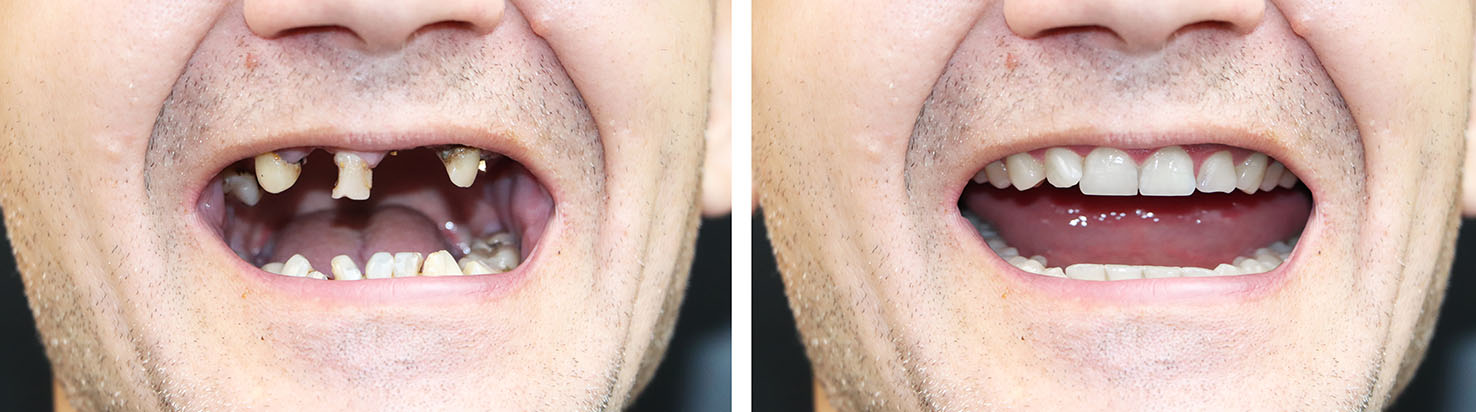
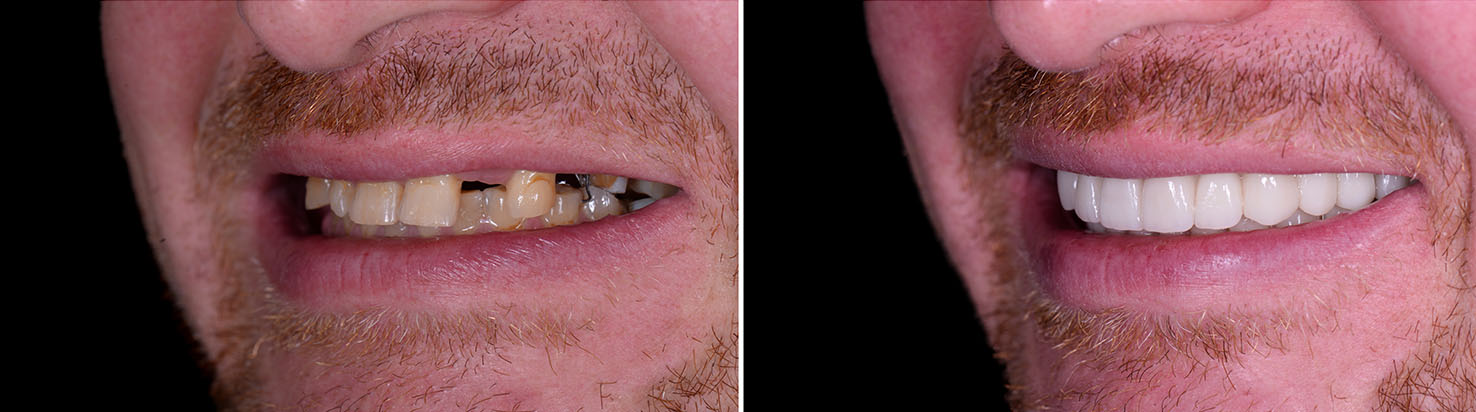
When most or all teeth are missing, full-arch restorations anchored by four or more implants offer a stable, permanent alternative to traditional dentures. These fixed or hybrid prostheses eliminate much of the slipping and maintenance associated with removable dentures while allowing fuller chewing function and a more natural appearance.
Not every patient starts with the same bone volume or tissue quality. Sometimes a bone graft or soft-tissue enhancement is necessary to create a stable foundation for implants. These preparatory procedures are common and are intended to improve long-term predictability. When needed, grafting is planned so it integrates smoothly with the implant timeline.
Implant longevity depends on good oral hygiene and regular maintenance. While implants themselves cannot decay, the surrounding gum tissue can be affected by inflammation if plaque control is not maintained. Routine professional checkups and at-home care routines help protect the implant and the supporting tissues for years to come.
Most implant systems have very high long-term success rates when placement and aftercare are properly managed. We focus on establishing realistic expectations and clear post-operative instructions so patients can participate in preserving their investment in oral health.
If you’re exploring tooth replacement options, the best way to know whether dental implants are appropriate is a personalized consultation. During that visit we’ll review your health history, examine your mouth, and outline a treatment path that reflects your needs and priorities. Planning is individualized — there’s no one-size-fits-all approach to implant care.
Implant treatment can restore the look, function, and confidence that come with a complete smile. With careful planning and consistent maintenance, implants offer a predictable and durable path to long-term oral health.
To learn more about implant dentistry or to schedule a consultation, please contact us for more information. Our team is ready to help you understand your options and begin the process of rebuilding a healthy, comfortable smile with Newpoint Family Dental.

Dental implants are medical devices that replace a missing tooth by restoring both the root and the visible crown. An implant body is placed into the jawbone and later supports a custom crown, bridge, or denture so the replacement behaves like a natural tooth.
After placement, the implant undergoes osseointegration, a biological process in which bone grows around the implant to create a stable foundation. Once integration is complete, the final restoration is attached and designed to match adjacent teeth for natural function and appearance.
Implants restore the root-level support that preserves jawbone and facial contours, helping to prevent the bone loss that can follow tooth extraction. Because implants are anchored in bone, they transfer chewing forces similarly to natural teeth and reduce the slipping and sore spots often associated with removable dentures.
Implant restorations also protect neighboring teeth by avoiding the need to alter healthy enamel for bridge abutments. Over time, that stability helps maintain proper tooth position and contributes to a more predictable long-term oral health plan.
Good candidates are generally in good overall health, have adequate bone to support an implant or are willing to consider preparatory procedures, and are committed to oral hygiene and regular dental visits. Certain medical conditions, medications, or tobacco use may require special planning or consultation with a physician before proceeding.
A thorough evaluation including medical history review, clinical exam, and imaging will determine candidacy and identify any factors that must be managed before treatment. Many patients who were once considered poor candidates can become eligible after treatments such as bone grafting, periodontal care, or smoking cessation.
Treatment begins with a detailed consultation and diagnostic imaging to plan implant position and restoration design. When needed, preparatory procedures such as extractions or grafting are completed first, followed by surgical placement of the implant fixture during an outpatient visit.
Osseointegration typically requires several weeks to a few months before the final restoration is placed, and temporary restorations can be used during this period to maintain function and aesthetics. The exact timeline varies with each clinical situation, and the practice of Newpoint Family Dental focuses on planning that balances speed with predictable healing and long-term success.
Some patients need bone grafting or soft-tissue augmentation when jawbone volume or gum tissue is insufficient to support an implant. These procedures rebuild or reshape the supporting structures so the implant can be placed in a stable, prosthetically driven position.
Grafting adds time to the overall treatment timeline because it requires healing and integration before implant placement is attempted. Careful planning and modern grafting materials usually allow these procedures to be integrated into a predictable treatment sequence with a high likelihood of success.
Implants are versatile and can support single crowns, implant-supported bridges, and full-arch solutions such as fixed prostheses or implant-retained overdentures. Single crowns replace one missing tooth without altering neighboring enamel, while multi-tooth restorations use implants as anchors to restore proper function across larger spans.
Full-arch restorations can be designed as permanently fixed prostheses or as hybrid solutions that combine removable elements for easier hygiene. The restoration type is chosen based on functional needs, aesthetic goals, and the patient’s oral anatomy.
Daily oral hygiene is essential: brush twice a day with a soft-bristled brush, clean between teeth and around implants with floss or interdental brushes, and follow any specific home-care instructions your clinician provides. Good plaque control reduces the risk of inflammation around the implant and helps maintain the supporting tissues.
Regular professional maintenance appointments are also critical to monitor integration, check the integrity of the restoration, and remove any hard deposits that at-home care may miss. Promptly report persistent pain, swelling, or mobility so the team can evaluate and address concerns early.
As with any surgical procedure, implant placement carries risks such as infection, bleeding, and, rarely, nerve or sinus complications depending on implant site and anatomy. In some cases implants may fail to integrate with bone, which can often be managed by revision or alternative treatment planning.
Long-term complications can include peri-implant mucositis or peri-implantitis, conditions driven by bacterial buildup and inflammation. Early detection and treatment through good hygiene and routine checkups are the most effective strategies for minimizing these risks and preserving implant health.
Implant surgery is commonly performed under local anesthesia to numb the site and keep the patient comfortable during the procedure. For patients with anxiety or for more complex surgeries, oral sedation, nitrous oxide, or intravenous sedation may be offered to enhance comfort and reduce stress.
The choice of anesthesia is made after discussing medical history, treatment complexity, and patient preferences so the plan balances safety and comfort. Pre-operative instructions and monitoring during the procedure help ensure a smooth experience and predictable recovery.
When placed and maintained properly, dental implants have a high long-term success rate and can provide decades of stable function. Longevity depends on factors such as oral hygiene, smoking status, systemic health, the quality of the supporting bone, and regular professional follow-up.
While implant fixtures themselves are designed to be permanent, prosthetic components such as crowns or attachments may require repair or replacement over time due to wear. With routine care and periodic evaluation at Newpoint Family Dental, many patients preserve function and aesthetics for many years.
Our mission is to help every patient enjoy healthy teeth and a confident smile, providing care that meets your needs and exceeds expectations.